High-precision markerless localisation for the factories of tomorrow
Breaking the 1cm Barrier — Introducing ALARMM_SBO
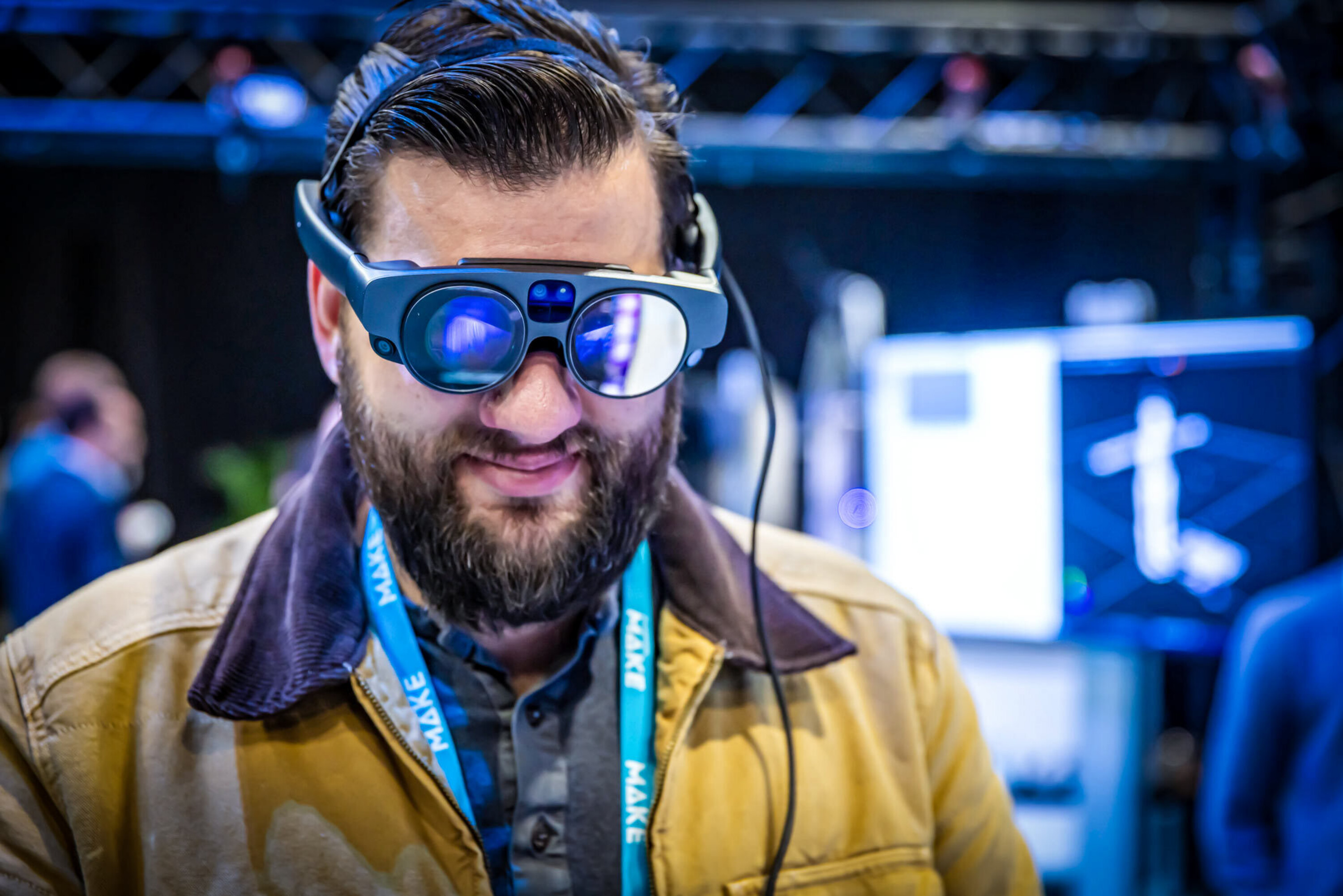
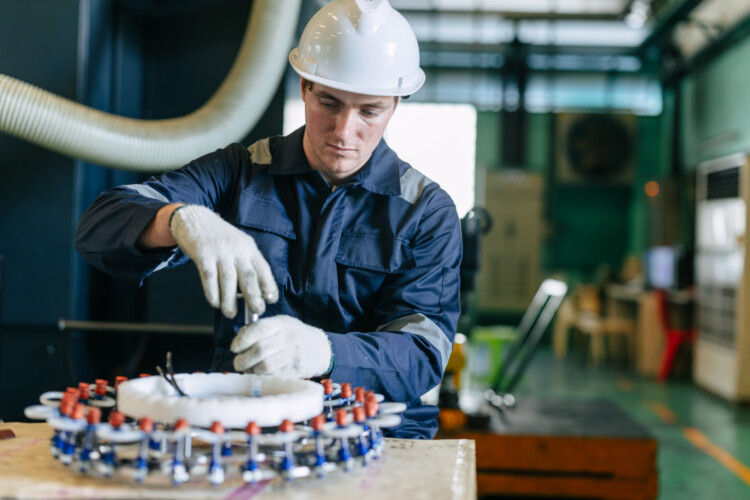
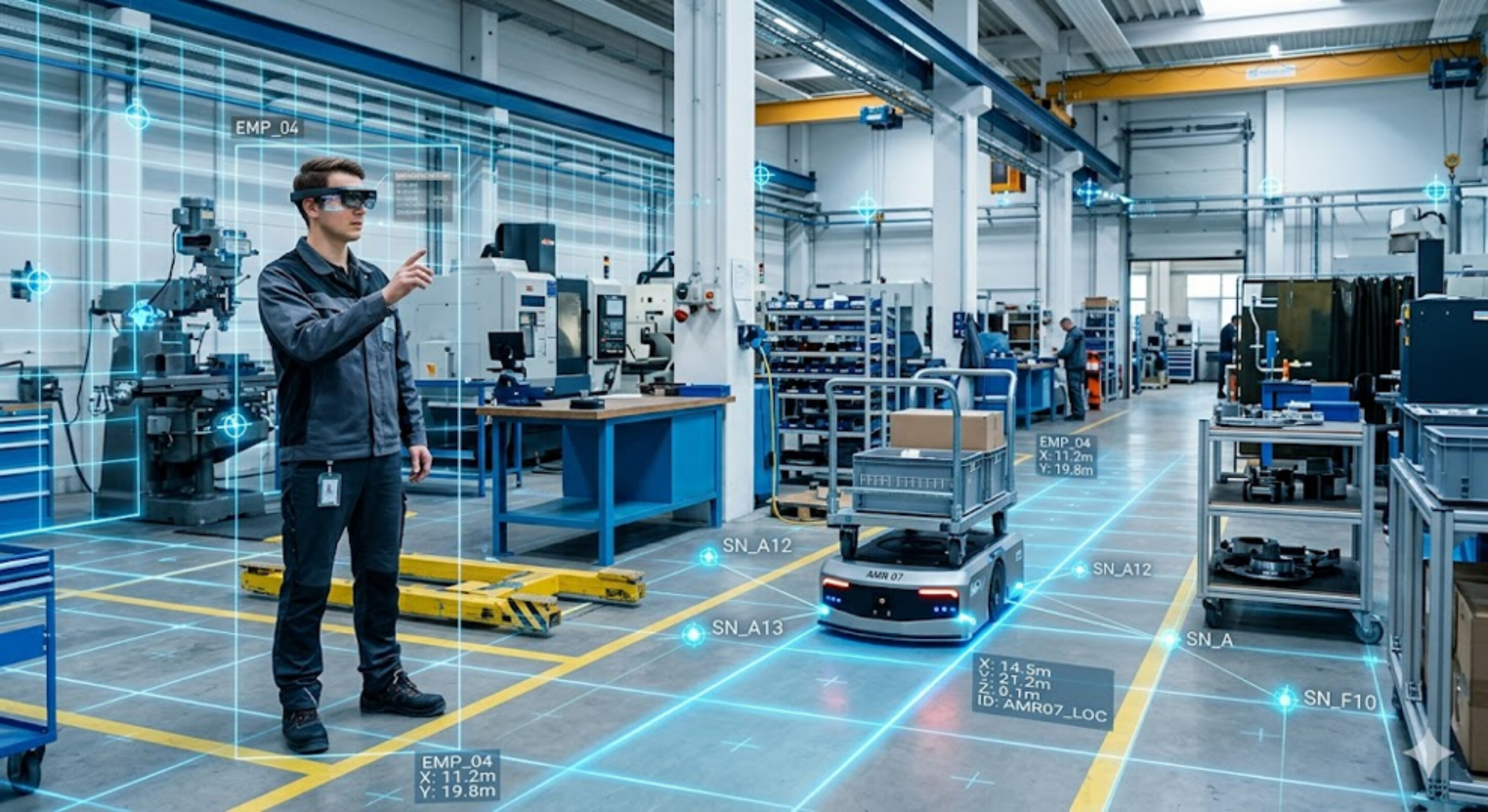
In the rapidly evolving landscape of Industry 4.0, the difference between a successful automated task and a system failure often comes down to a single centimeter. Whether it is an Augmented Reality (AR) headset guiding a technician through a complex machine repair or an Autonomous Mobile Robot (AMR) docking with surgical precision, the need for accurate, robust, and cost-effective 3D localisation has never been greater.
Today, we are thrilled to introduce ALARMM_SBO (Accurate large-area Localisation and spatial Alignment with Robust Markerless Methods), a Flanders Make strategic basic research project dedicated to redefining how machines and humans navigate industrial spaces.
The Problem: The "Curse of Drift"
Standard Simultaneous Localisation and Mapping (SLAM) solutions are excellent for general navigation, but they face significant hurdles in large-scale industrial environments. In "feature-poor" area such as long corridors with white walls or dark, low-texture warehouses SLAM systems can "drift," losing their precise location by centimetres or even meters.
To combat this, many companies resort to expensive infrastructure or thousands of physical markers (like QR codes) stuck to floors and ceilings. We aim to change that. Our goal is to achieve 1cm spatial accuracy in areas larger than 600m² with minimal to zero reliance on physical markers.
The Solution: Four Pillars of Innovation
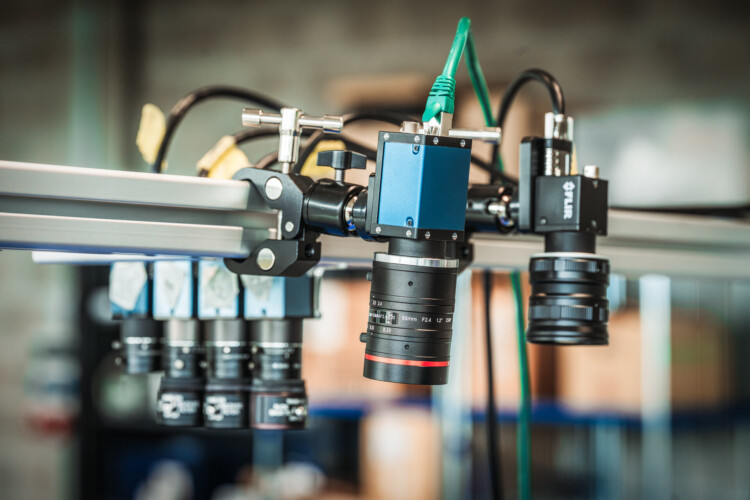
The project targets a hybrid approach that goes beyond traditional vision-based SLAM. Our solution (RR-1) rests on four technical pillars integrated into a modular stella_vSLAM framework:
- Digital Twin Alignment: We link visual tracking maps directly to high-fidelity 3D digital factory scans or CAD models, using the environment itself as a massive, drift-free reference.
- Semantic Reasoning: The system doesn't just see pixels; it understands geometric relationships (like the known distance between racks) to correct its pose.
- Dynamic Scene Awareness: By modeling the behavior of moving objects like sliding doors or other robots, the system can filter out "noise" that would otherwise confuse localisation.
- AI-Enhanced IMU Positioning: When vision fails (e.g., in complete darkness), our Deep Learning-based IMU models ensure graceful degradation, maintaining tracking through high-frequency inertial data.
Real-World Impact: From AR to AMR
We are validating these innovations through two primary application cases driven by our industrial User Group:
- AR-based Employee Guidance: Providing spatially accurate cognitive support for maintenance and assembly, ensuring digital annotations stay perfectly aligned with real-world machines.
- AMR / AGV & Forklift Localisation: Enabling robots to perform fine-grained tasks like docking and machine tending in dynamic shopfloors, while also supporting precise pallet tracking in logistics applications.
What’s Next?
As we conclude our first year, we have already established a rigorous localisation benchmark in our warehouse infra facility. Over the next two years, we will incrementally deliver the ALARMM-SLAM toolbox (RR-1) and the SLAMTEST toolbox (RR-2), which allows companies to predict localisation accuracy on their own shopfloors before deploying a single sensor.
Stay tuned as we move closer to the 1cm goal, one landmark at a time. If you are interested in the project's developments or would like to join our User Group, feel free to reach out to us to schedule a meeting.