From sustainability goals to design decisions

Embedding sustainability in early product development
Designing sustainable products is no longer a niche ambition. For many manufacturers, it is becoming a basic expectation, driven by regulation, customer demand and internal environmental targets. Yet one challenge keeps returning: How do we translate sustainability goals into concrete design decisions?
In our research, we see that sustainability is still too often assessed at the end of the Product Development Process (PDP), when major design choices are already fixed. That limits impact and increases risk. We developed a structured approach that helps you embed sustainability early in the PDP, when design freedom is still high and changes are less costly.
Why early sustainability decisions matter
Sustainability requirements are increasing in number and complexity. Regulations, standards and company strategies overlap and evolve, creating uncertainty for engineering teams.
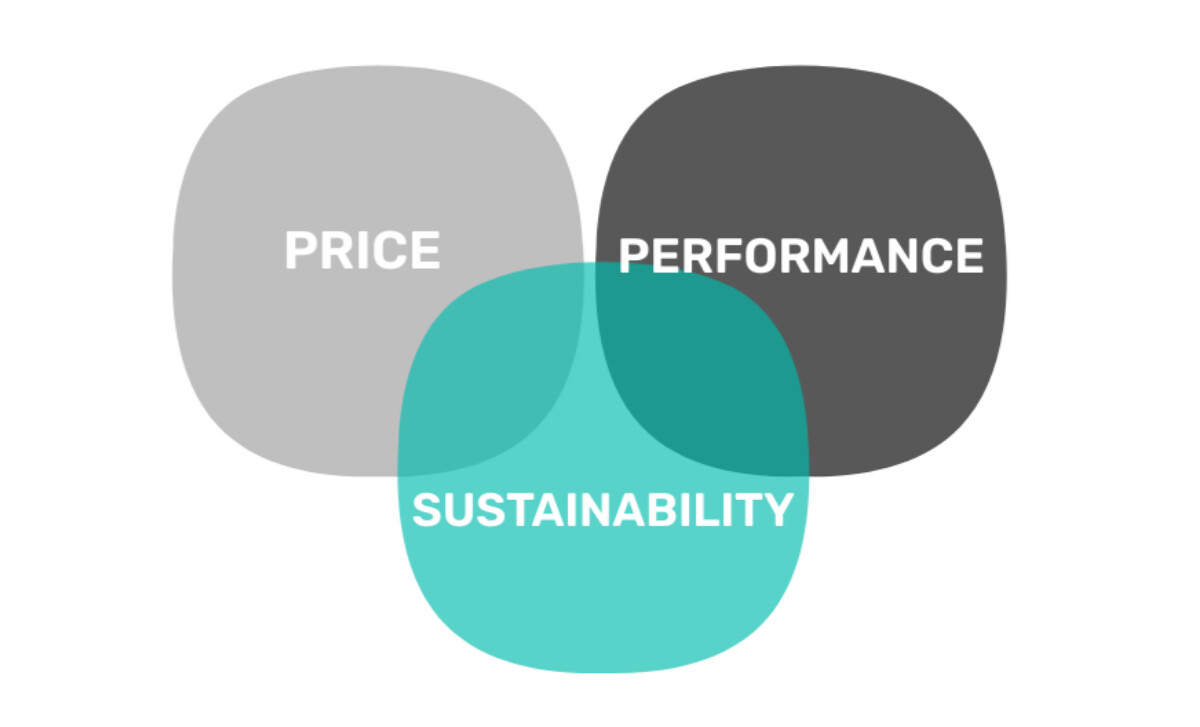
If sustainability is not translated into engineering terms early on, risks quickly increase. Compliance issues surface late, redesigns become necessary, and opportunities for circular design are missed. Making trade-offs between cost, performance and sustainability explicit from the start requires structure, data and transparency.
Our approach consists of three essential building blocks that help engineering teams work with sustainability in a concrete and structured way.
1. A structured library of sustainability requirements
To support early decision-making, we built a product-level sustainability library that brings structure to a fragmented landscape. The library connects regulations, company or sector strategies, sustainability indicators and the explicit links between them.
It covers topics such as EcoDesign and the Sustainable Products Regulation, circularity and end-of-life requirements, expectations around repairability and durability, and sector-specific standards. Instead of searching through separate documents, engineers work with one consolidated overview.
This overview makes clear which sustainability KPI's are already mandatory, which ones are emerging, and where voluntary improvements could strengthen competitiveness. As a result, teams are better prepared for compliance while also creating space for informed design discussions from the earliest phases of the PDP.
2. Connecting design parameters to sustainability KPI's
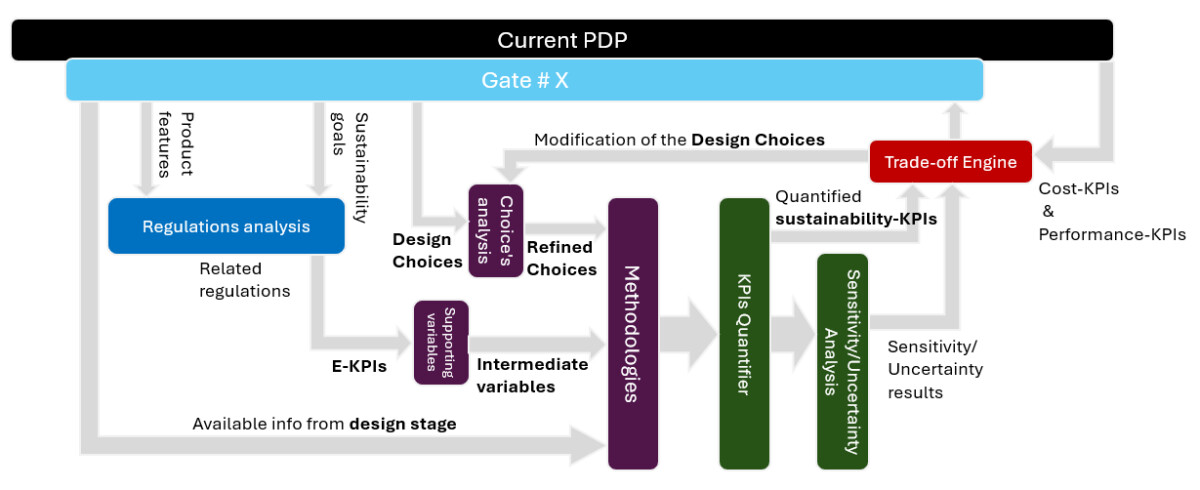
Knowing which KPI's matter is only the first step. The real challenge is understanding how design choices influence them. At the core of our method lies a straightforward principle: component-level design parameters determine product-level sustainability performance. In complex products, this quickly becomes difficult to manage. Hundreds of components can result in thousands of design parameters, making it hard to see which choices really matter.
To address this, we developed a selection mechanism that identifies the design parameters with the highest impact on a chosen sustainability KPI. We mapped how design aspects such as material selection, dimensions and mass, joining and fastening methods, accessibility, modularity and architectural choices influence indicators including carbon footprint, repairability, recyclability, toxicity, disassembly effort and material criticality.
This approach transforms sustainability from a qualitative goal into a quantifiable design driver, allowing engineering teams to:
- Evaluate sustainability impacts early in concept design or even exploration phase
- Compare alternative designs using objective KPI's
- Identify the engineering levers that matter most from sustainability prospect
- Make trade-offs explicit across performance, cost, and sustainability
3. A practical tool for calculating repairability
Repairability is one of the strongest levers for more sustainable products, yet it is often discussed without clear metrics. We developed a practical tool that allows teams to quantify repairability during early design iterations. The tool calculates a Repairability Score based on measurable parameters, such as:
- Component accessibility
- Component priority
- Required tools
- Disassembly sequence and complexity
- Fastener types and quantities
- Time and effort needed to reach and replace parts
By linking these parameters to broader sustainability KPI's, teams can objectively compare the repairability of different design variants, identify targeted and cost-effective improvements, and integrate repairability into design reviews from day one. The tool is designed for real industrial use: lightweight, transparent and suitable for integration into existing engineering workflows.

From sustainability ambition to informed design decisions
This approach brings together regulatory awareness, data-driven design evaluation and practical decision-support tools in one coherent framework:
- Translate sustainability requirements into engineering language
- Understand how component choices influence system-level sustainability
- Justify design trade-offs with objective, traceable metrics
- Develop products that are not only compliant; but competitive in a circular economy
Get in touch
Are you exploring how to integrate sustainability more structurally into your product development process?
We are excited to collaborate and share our insights.