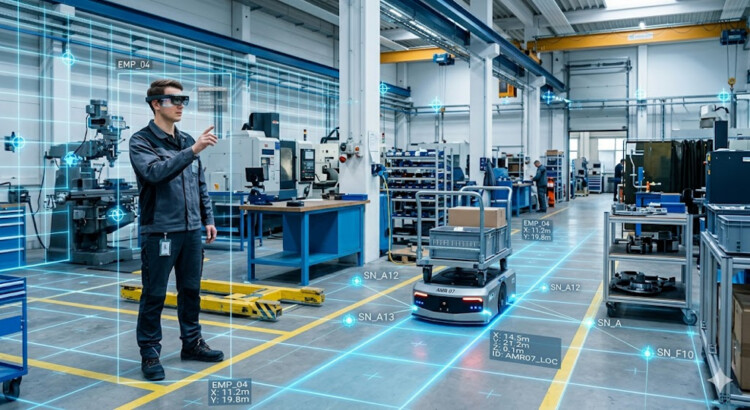
Smarter Manufacturing for Construction


How BIM Integration Streamlines Off-Site Construction
If you're a manufacturing company building products for the construction sector, you know the challenges: tight deadlines, last-minute design changes, complex logistics, and constant pressure to reduce costs. Your ERP system is built for manufacturing - but the data you receive from the construction world often doesn’t fit neatly into it.
Building Information Modeling (BIM) can transform how you plan, design, and deliver projects. As a holistic approach to managing information across a built asset's lifecycle, BIM enables smarter decisions — from the earliest sketches to long-term operations.
With Digibuild, our mission is to help companies unlock the full potential of BIM data. We help manufacturers streamline how construction data flows into their ERP systems. This way, we can bridge the gap between designers, builders, and producers, and support the industrialization of off-site construction through better coordination and automation.
Whether you're dealing with BOMs, machine files, logistics estimates, or change requests — we’re helping companies like yours optimize digital workflows.
Unlocked Potential
By integrating structured, multi-disciplinary data into a digital model, BIM enables informed decision-making from design to operations. However, the true power of BIM is only unlocked when it’s connected to the rest of your digital ecosystem — especially your Enterprise Resource Planning (ERP) systems. In most companies, BIM and ERP systems operate in parallel — but not in sync. While BIM tools like Autodesk Revit excel at design, visualization, and coordination, ERP systems like Microsoft’s Business Central are the backbone for resource management, finance, procurement, and logistics. Without integration, critical information must be manually transferred, re-checked, and re-entered — leading to delays, errors, and inefficiencies.
We’re tackling this problem head-on, working with contractors, prefab manufacturers, and project managers to build practical, plug-and-play BIM-to-ERP integrations that solve problems you face every day.
What’s at Stake? The Value of Connecting BIM to ERP
Bridging the gap between BIM and ERP offers substantial benefits for manufacturers and construction firms, particularly in off-site and modular contexts:
- Automated data exchange
Say goodbye to manually re-entering BOMs, material codes, and quantities. - Direct-to-machine production
Feed files (e.g. DXF for CNC) straight from BIM to the shop floor. - Smarter planning and forecasting
Improve cost estimation, procurement timing, and logistical coordination. - Real-time change management
Sync design changes with production progress and inventory updates. - Reduced risk of errors
Avoid miscommunications between design and operations teams.

Real Challenges from the Construction Site — and How We Solve Them
We’ve identified several recurring pain points for construction teams working with off-site production or custom fabrication. Here's how BIM-ERP-integration can be the solution:
BOMs Are Entered Twice — or More
When BIM and ERP don’t sync, project teams manually re-enter design data into ERP. It’s slow, error-prone, and frustrating, especially with mismatched material codes...
The solution: BOMs are exported directly from BIM into ERP. No manual work. A built-in checker ensures every field is correctly mapped.
Shop-Floor Machines Stand Idle
Even if your Revit files are CNC-ready, they often need to be manually uploaded to machines — wasting time on every project.
The solution: Production files are linked directly to ERP orders and routed to the right machines using an integrated add-on - speeding up the entire shop-floor process.
Client Wants Changes... Is It Too Late?
In modular or off-site construction, clients often request changes mid-process. Without real-time data, you don’t know if a change is still possible.
The fix: ERP logs production progress, syncing with BIM. Designers instantly see which elements are still editable — and which are already built.
Costs and Shipping Are Hard to Estimate
Custom components make it hard to forecast logistics and pricing. Surprises at the end of a project can eat into your margins.
The fix: BIM-driven ERP data supports automated cost and shipping estimates based on material parameters and packaging constraints (e.g. pallet sizes, stacking rules).
The BIM-to-ERP connection isn’t just a technical improvement — it’s a strategic one. It enables manufacturers and builders to: deliver faster, reduce risks, respond to changes and scale more effectively.
Join us today in Digibuild’s mission to optimize digital workflows in off-site construction and manufacturing.
Technologies

Business, Sustainability & Operations Management
Optimising the operations, sustainability, and value-creation of businesses.
Let’s Talk About Your Use Case
Are you struggling with the same issues? Or facing other BIM-related roadblocks in your projects?
Let’s explore your specific use case and how DigiBuild can help.