Skylux streamlines operator support with CAD-driven work instructions

“By intelligently integrating CAD design, digital work instructions and MES, Skylux can support operators more quickly and consistently in a complex production environment.”
For Skylux, a specialist in daylight solutions and outdoor living, the launch of the new Calista product range brought with it a wealth of opportunities, but also added complexity on the shop floor. Calista is highly configurable and therefore places high demands on production and assembly, particularly when it comes to assembling profiles. Almost every product is a unique variant, with its own instructions and specific assembly steps. This made it increasingly difficult to support operators quickly, correctly and consistently using traditional work instructions.
Together with Code Care, its partner for the Manufacturing Execution System (MES) on the shop floor, Skylux therefore set out to find a scalable approach. That search led them to the Flanders Make Digital Work Instruction Toolkit, specifically the CAD2DWI (CAD to Digital Work Instructions) and ImageryGeneration modules. The aim: to bridge the gap between CAD design, the automatic generation of digital work instructions and operator guidance on the shop floor.
From CAD-model to clear instructions on the shopfloor
Because Calista was designed entirely in CAD from the outset, it became possible to use that CAD data directly as the basis for assembly instructions. From the CAD model, the application can automatically generate digital assembly instructions, supplemented with rendered images and videos. This can be done to a large extent automatically, significantly reducing the need for the traditional, manual process of creating images, writing out procedures and compiling everything.
Various improvements were made to the toolkit as part of the project. For example, the AI model for component classification was further trained on Skylux-specific fasteners such as bolts and screws, and the instruction generator was expanded with additional rules. Image generation was also refined, partly through better determination of the optimal camera angle and by expanding the tool library with customer-specific tools and 3D visualisations. As a result, the system can automatically generate more relevant, detailed and visually clear instructions, including the correct tools for each step.
Code Care played a key role in translating this into the shop floor. As the party responsible for the MES environment at Skylux, Code Care helped ensure that the generated instructions, images and videos could be used effectively within the existing shop floor environment. Together with Skylux and the CAD2DWI team, new versions were consistently validated against the reality of the assembly process, ensuring that the generated data effectively meets the practical needs of operators.
Faster creation, less manual work, better support
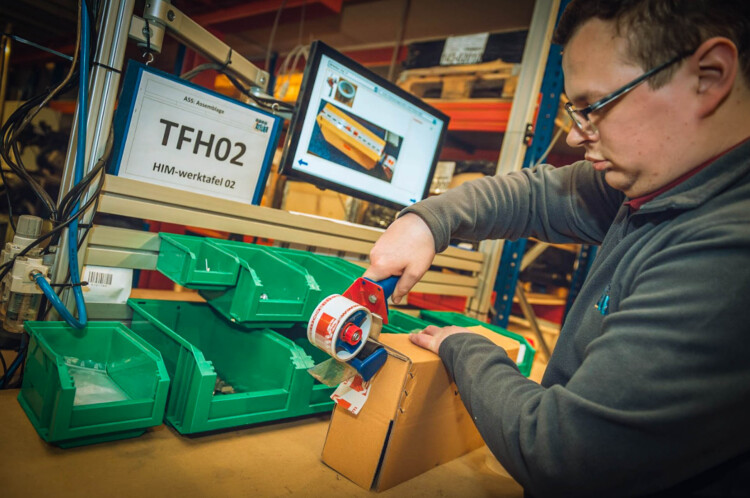
The partnership should bring Skylux a significant improvement in the creation and deployment of work instructions. As a result, the creation process can be much faster and require far less manual effort. At the same time, the expertise required to draw up instructions can be reduced, which is important in a production environment with highly configurable products. Operators can also receive clear, visual and context-specific guidance that aligns with actual production orders and sub-assemblies.
The potential added value is also significant for the organisation as a whole. By linking design software with the MES, the connection between design intent and actual assembly can be better maintained. Furthermore, the generated instructions, including images and videos, are exported in a structured format, enabling Skylux and Code Care to integrate them seamlessly into existing and future operator support systems. This creates an approach that not only works for Calista but also offers prospects for further digitalisation and scalability in production.
Looking ahead, Skylux sees many opportunities for further development, including smarter tool management, richer image generation and better interpretation of parts lists to build instructions in an even more targeted and automated manner.
More about the used technology

Employee 5.0 Systems
Boosting well-being & productivity.