How to build trust in industrial GenAI

Generative AI is rapidly finding its way into industry, from operator support and automated reporting to forecasting and other digital applications. But demonstrating that an AI application works is only the first step.
In an industrial environment, companies also need to understand when they can rely on its output, what risks need to be managed and which safeguards are appropriate. Together with Sirris, we developed a practical AI trustworthiness playbook to help companies identify which measures are needed for their specific application.
Trustworthiness depends on the application
There is no single definition of a trustworthy GenAI application that works for every industrial use case.
An AI assistant supporting an operator, for example, has different requirements from an application that helps prepare administrative documents. Applying every possible safeguard to every application can add unnecessary complexity. Overlooking an important risk, on the other hand, can make an application unsuitable for its intended environment.
Our playbook therefore approaches trustworthiness in context. It considers nine aspects of trustworthiness and helps teams determine which ones deserve particular attention for their application: Accuracy, Safety, Compliance, Reliability, Robustness, Explainability, Transparancy, Fairness and Low Latency.
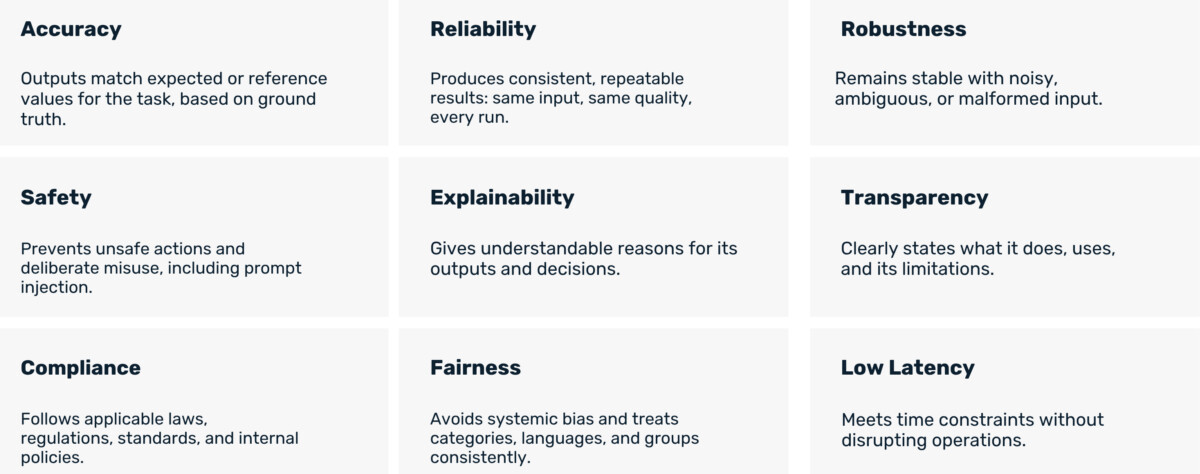
A decision table helps you connect the conditions of a use case with appropriate design strategies. This makes it easier to move from a general discussion about trustworthy AI towards concrete technical and organisational choices.
To make this practical, we distinguish five industrial use-case clusters:
- digital assistants;
- anomaly detection;
- time-series forecasting;
- administrative support;
- existing products, enhanced with GenAI.
Testing our GenAI Playbook for operator support
We put our playbook to the test, resulting in a multimodal GenAI starter kit for dynamic shop-floor operator guidance.
Operators work in changing environments where useful information can come from different sources. Unlike consumer chatbots, industrial assistants must reason over a combination of structured and unstructured information, ranging from manuals and maintenance procedures to live sensor data and inspection images.
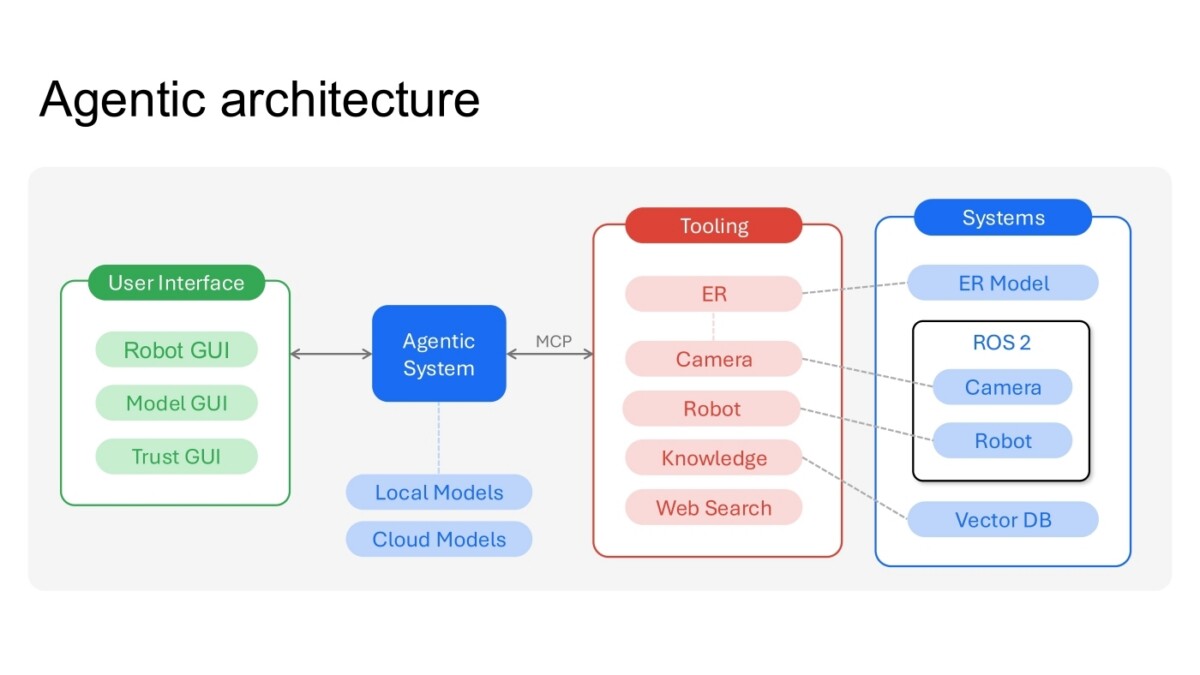
Rather than building the solution around one AI model, we use a model-agnostic, agentic architecture. This makes it easier to adapt the application as models and requirements evolve.
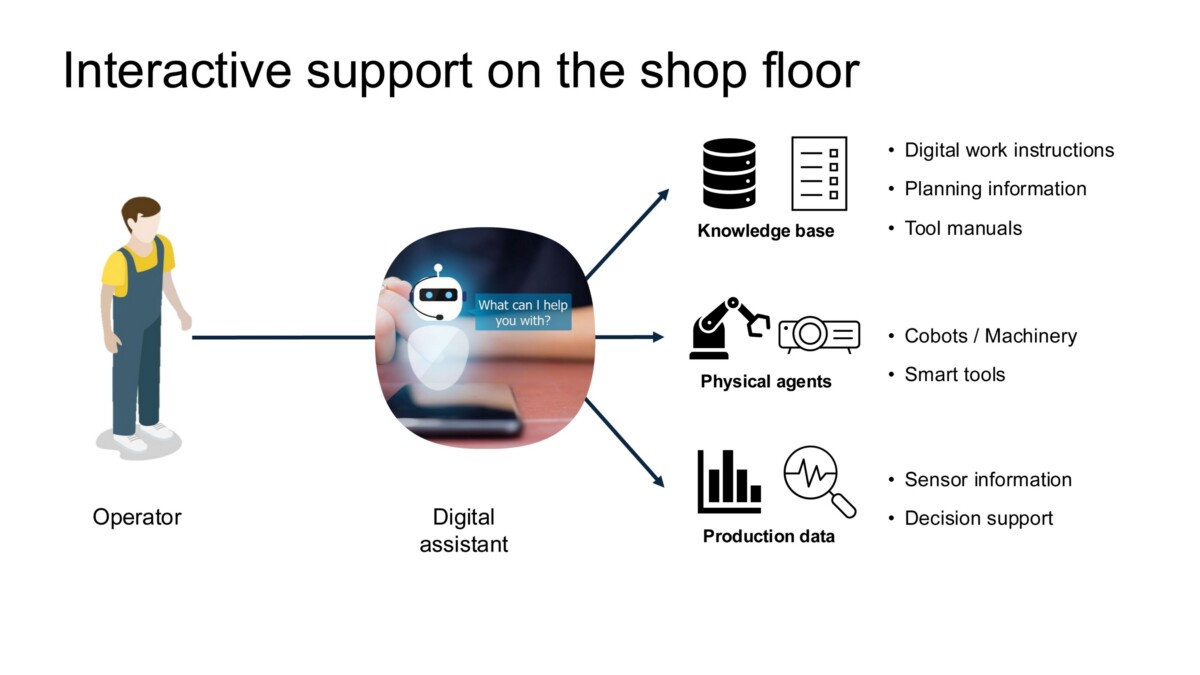
Key highlights of the multimodal starter kit include:
Grounding with validated information
Retrieval-Augmented Generation (RAG) connects the assistant with validated internal documentation. This helps ground its answers in relevant company information and reduces the risk of unsupported responses.
Combining visual and language information
Vision-language capabilities allow the application to interpret visual information from the workspace alongside text and other inputs. This can support tasks such as identifying components or providing information about their location.
Making AI behaviour more transparent
A dedicated trustworthiness interface provides insight into elements such as tool use, retrieved document fragments and processing steps. This helps engineers and users better understand how the application arrives at an output and supports evaluation before wider deployment.
Responsible Deployment
Generative AI offers useful opportunities for manufacturing, but successful industrial deployment requires more than selecting a capable model.
Our aim is to assist in the decision-making process by:
- identifying trust requirements of a specific use case
- providing the tools for testing solutions in a controlled environment
- easier assessment of the behaviour and limitations of an AI application
- helping teams better understand an AI application’s behaviour, strengths and limitations.